Qoyod: Ultimate 2026 Guide
VAT compliance in Saudi Arabia is not optional. Since ZATCA mandated e-invoicing for phase-one businesses in 2021 and expanded the rollout in waves through 2024 and 2025, the pressure on Saudi SMBs to run compliant, connected accounting software has only intensified. Qoyod was built specifically for this environment. It's a cloud accounting platform for businesses in Saudi Arabia and the wider GCC that handles VAT filing, Arabic-language invoicing, inventory, and full double-entry accounting in one place. Explore Qoyod free →
What Qoyod Actually Does
Picture a mid-sized trading company in Riyadh. They have 15 employees, buy goods from suppliers across the GCC, sell to retail customers and corporate clients, and have to file quarterly VAT returns with ZATCA. Before Qoyod, they were stitching together a Saudi-localized spreadsheet for VAT, a separate invoicing tool, and a basic ledger in another system. Reconciling them every quarter took a week and still produced errors.
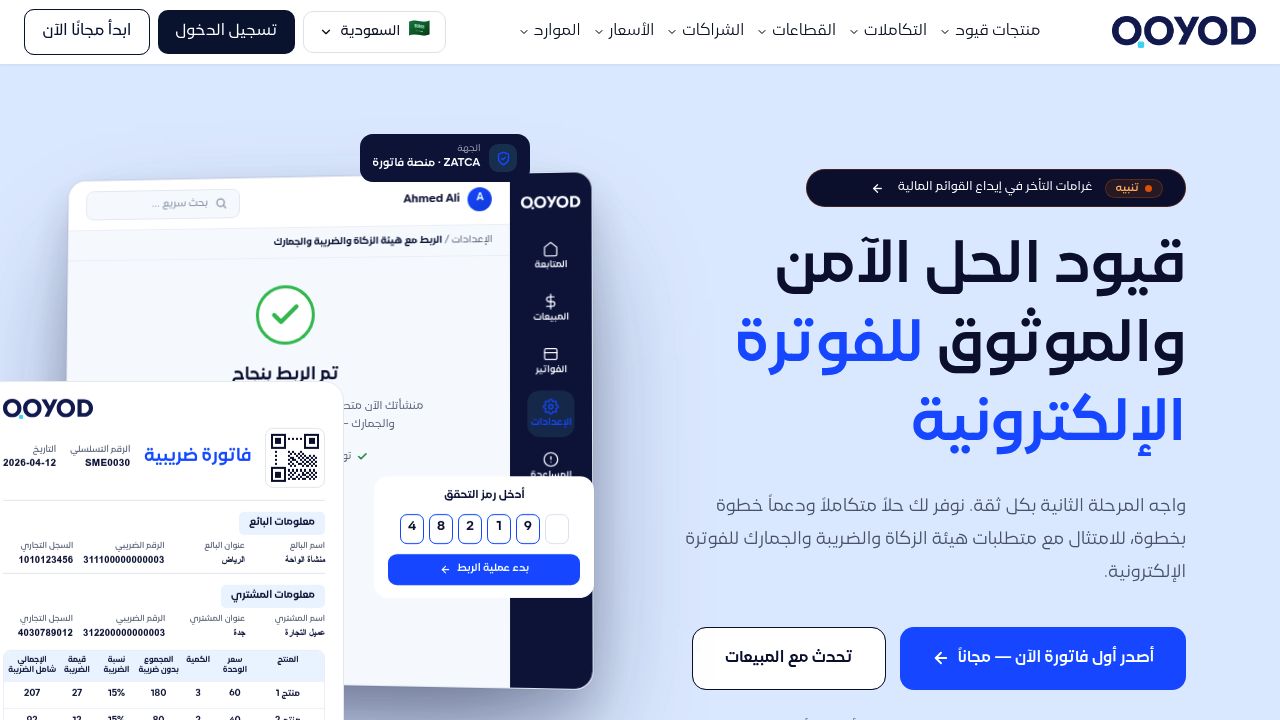
Qoyod replaces all of that. It's a unified platform that starts with VAT-compliant invoicing — the kind ZATCA's e-invoicing mandate (Fatoora) requires, with QR codes, structured XML data, and Arabic-language output — and builds a full accounting system around it. Chart of accounts, journal entries, accounts receivable and payable, inventory tracking, financial statements, multi-branch management, and automated VAT reports are all in one system.
The platform runs in Arabic and English, which matters more than it sounds. Most international accounting tools are English-first with Arabic bolted on as an afterthought. Qoyod was designed for Arabic-speaking businesses, which means the UI, customer support, help documentation, and workflows all reflect how GCC businesses actually operate.
It's cloud-based, so it works from any device, and it supports multiple users with role-based access — the business owner, the accountant, the warehouse manager, and the sales team can all work in the same system with appropriate permissions. See how Qoyod handles ZATCA compliance →
Who It's Built For
Qoyod is built for small and medium businesses operating in Saudi Arabia, the UAE, and the wider GCC region. This includes trading companies, retail businesses, services firms, and any other business that is VAT-registered, needs to issue compliant tax invoices, and wants a single system to manage their full accounting workflow.
It's a particularly strong fit for businesses that were previously using generic international software — QuickBooks, Xero, or even spreadsheets — and struggling to get proper VAT compliance, Arabic invoicing, and local regulatory alignment from tools not built for the GCC market.
Qoyod is also well-suited for businesses with physical inventory. The inventory management module handles product tracking, stock movements, purchase orders, and cost of goods in integration with the accounting side — so your stock levels and financial records stay in sync automatically.
It's NOT the right tool for large enterprises with complex multinational consolidation needs, ERP requirements, or highly customized industry-specific workflows. For businesses at that scale, purpose-built enterprise solutions or Oracle NetSuite with GCC localization would be more appropriate. Qoyod's sweet spot is the 2-to-50-employee Saudi or GCC business that needs serious accounting functionality without an enterprise price tag or a complex implementation project.
Key Features That Stand Out
- ZATCA-compliant e-invoicing (Fatoora): Generate tax invoices that meet Saudi Arabia's e-invoicing mandate, including QR codes, XML structured data, and Arabic-language output. This is not an add-on — it's baked into the core of how Qoyod handles every invoice.
- Full VAT management: Automatically calculates VAT on sales and purchases, generates VAT return reports in the format ZATCA requires, and keeps a clean audit trail so quarterly filing is a matter of pressing a button rather than a reconciliation project.
- Arabic and English interface: The full platform works in both languages, not just in terms of translation but in terms of document formatting, number display (including Arabic-Indic numerals where required), and layout conventions appropriate to each language.
- Inventory and warehouse management: Track products, manage stock levels across locations, process purchase orders and sales orders, and have inventory movements automatically reflected in your financial accounts. No separate inventory tool required.
- Multi-branch and multi-user support: Manage multiple business locations from a single account, with per-branch reporting, consolidated financial statements, and role-based user permissions so each team member sees only what's relevant to their work.
The VAT and ZATCA compliance angle is Qoyod's most critical differentiator for Saudi businesses. Here's why it matters in concrete terms: Saudi Arabia's Fatoora e-invoicing mandate requires tax invoices to be generated in a ZATCA-approved format with specific data fields, QR codes, and integration with ZATCA's systems for phase-two businesses. Penalties for non-compliance are real, and audits do happen. Using a generic international tool and manually adjusting invoices to try to meet the standard is a risky workaround. Qoyod is built around this requirement from the ground up, which means compliance is a byproduct of normal use — not a separate checklist to manage.
The inventory module is the second major reason businesses choose Qoyod over importing a foreign alternative. For a trading company or retailer managing hundreds of SKUs, having inventory and accounting in the same system eliminates a painful category of reconciliation errors. When a product is received, both the inventory count and the purchase entry update automatically. When it's sold, the revenue, the inventory reduction, and the VAT entry all happen in one transaction. Start your free trial and run your first VAT-compliant invoice →
Pricing Breakdown
Qoyod offers tiered subscription pricing aimed at different business sizes in the GCC. Based on general knowledge of their pricing structure, expect a starter tier for very small businesses or sole practitioners, a growth tier for small businesses with multiple users and inventory needs, and a business tier for more established companies needing multi-branch support and advanced reporting. They have historically offered a free trial. Verify current SAR-denominated pricing at qoyod.com — pricing may have updated since this was written.
| Tier | Best For | What You Get |
|---|
| Starter | Freelancers and micro-businesses | Basic invoicing, VAT returns, single user, limited transactions |
| Growth | SMBs with 2–15 employees | Multi-user, full accounting, inventory, ZATCA compliance, reporting |
| Business | Mid-sized businesses with multiple locations | Multi-branch, advanced reporting, priority support, higher transaction limits |
Qoyod vs. the Competition
In the GCC market, Qoyod's main competition comes from Zoho Books (with its GCC localization), QuickBooks with Saudi VAT customizations, and a handful of other regional tools like Wafeq. The comparison is worth being direct about.
Zoho Books is a strong global accounting product with a GCC edition that handles VAT and Arabic. If your business is already deep in the Zoho ecosystem (Zoho CRM, Zoho Inventory, Zoho Desk), staying within Zoho's suite has real advantages. The cross-product integration is genuinely useful. However, Zoho Books' GCC localization is layered on top of a global product, while Qoyod was built for the GCC market first. For businesses where Arabic-language workflows and Saudi regulatory compliance are the primary requirements, Qoyod's native approach often wins on fit and ease of use.
QuickBooks is popular globally, but its Saudi VAT compliance has historically required workarounds, and Arabic-language support has lagged. For a Saudi business choosing an accounting platform fresh, QuickBooks is harder to recommend than a purpose-built regional tool.
One honest limitation of Qoyod: if your business operates significantly outside the GCC — say, you have substantial operations in Europe or North America — Qoyod's local focus becomes a constraint. It's optimized for GCC compliance, not for multi-jurisdiction global accounting. A business with that profile needs a more internationally-scoped platform.
Want a deeper dive? Compare Qoyod vs. Zoho Books for GCC businesses in our upcoming head-to-head guide.
Emerging Trends Shaping Accounting Software in 2026
Three trends matter specifically for businesses in the Saudi and GCC accounting software market in 2026.
First: ZATCA's e-invoicing rollout continues to expand. Phase one (generation) and phase two (integration) of Fatoora have progressively covered more businesses by revenue tier. By 2026, a large proportion of VAT-registered businesses in Saudi Arabia are either already on phase two or approaching it. This means the pressure to use compliant, connected software is higher than ever — and tools that can't maintain ZATCA API integration will lose clients to those that can. For businesses shopping for accounting software today, ZATCA compliance isn't a feature to check — it's a minimum requirement.
Second: AI-driven bookkeeping automation is arriving in regional tools. International platforms like QuickBooks and Xero have been rolling out AI transaction categorization, automatic reconciliation suggestions, and anomaly detection for years. Regional tools like Qoyod are now building similar capabilities, and in 2026 the gap between regional and global tools on AI features is narrowing. For GCC businesses, the question is shifting from "does it have AI?" to "does it have AI that understands my local tax rules and transaction types?"
Third: cloud adoption for SMBs in Saudi Arabia has accelerated sharply. The Vision 2030 digital transformation agenda has pushed SMB software adoption faster than most markets. Cloud accounting has gone from a leading-edge choice to the expected default for any business setting up a new accounting system. This benefits platforms like Qoyod directly — their cloud-native architecture was ahead of market readiness when they launched, and the market has now caught up.
For Saudi and GCC businesses, 2026 is a year where using the right accounting software is both a compliance necessity and a competitive advantage. Qoyod gives local businesses a native solution that was built for this environment rather than adapted to it.
How to Get Started
- Register for a free trial at qoyod.com — no credit card required to start.
- Set up your business profile: company name, VAT registration number, and GCC country.
- Import or enter your chart of accounts and opening balances, or start fresh with Qoyod's pre-built Saudi-compliant chart of accounts.
- Issue your first tax invoice and verify the ZATCA-compliant QR code and XML output before going live with real transactions.
Frequently Asked Questions
Is Qoyod good for small businesses?
Yes — it's one of the best-fit accounting platforms for small businesses in Saudi Arabia and the GCC specifically. The combination of ZATCA compliance, Arabic-language support, and full accounting functionality in one tool is genuinely rare at the SMB price point.
Does Qoyod support ZATCA e-invoicing?
Yes — ZATCA-compliant e-invoicing (Fatoora) is a core feature, not an add-on. Qoyod generates invoices with the required QR codes, structured XML data, and supports the phase-two integration requirements.
What does Qoyod cost?
Qoyod offers tiered subscription pricing in SAR. There is a starter tier for micro-businesses and growth and business tiers for larger teams. Check qoyod.com for current pricing — they periodically update plan structures.
Is there a free trial?
Yes, Qoyod offers a free trial period. You can start at qoyod.com and test the core features before committing to a paid plan.
An infographic comparing Qoyod's VAT workflow against manual processes would be highly effective here — it illustrates the time-saving clearly for businesses still using spreadsheets for VAT returns.
If you're running a business in Saudi Arabia or the GCC and still managing VAT manually or with a tool not built for the local market, Qoyod is the upgrade that makes compliance automatic rather than painful. Start your free trial and issue your first compliant invoice today →